

Trying to Conceive in Your 30s? My Honest Review of Inito’s InSight Wireless Reader
Trying to conceive in your 30s can feel like stepping into a confusing mix of messages.
On one hand, you’re told that getting pregnant is easy and that you just need to “relax.” On the other hand, society loves to push the narrative that fertility falls off a cliff after 30 and that you’re suddenly on a ticking clock!
The truth, as always, is somewhere in the middle.
As a functional fertility nurse and founder of Motherland Wellness, we work with hundreds of women every year who are trying to conceive in their 30s. What we see most often isn’t a lack of fertility - it’s a lack of clarity around what is actually happening hormonally throughout the menstrual cycle.
Many women rely on apps that predict ovulation based on average cycle patterns or LH ovulation strips that only measure a rise in Luteinizing Hormone (LH) and give results based on population average thresholds. When those tools don’t give clear answers, it can feel frustrating and confusing.
That’s where multi-hormone tracking comes in.
Over the last few years, I’ve tested several products - everything from apps, monitors, OPKs - all designed for hormone tracking for ovulation, and most recently, I’ve been using the Inito Fertility Monitor, which measures four key fertility hormones from home.
In this article, I’m sharing my honest Inito review of their newly launched InSight Wireless Reader™, how the reader works, and why multi-hormone tracking can provide much more clarity when trying to conceive.
Why Hormone Tracking Matters When Trying to Conceive
Ovulation is the single most important event in the menstrual cycle when it comes to fertility. Without ovulation, pregnancy simply cannot occur.
But ovulation isn’t just one moment - it’s the result of several hormones working together in a coordinated sequence when the body feels safe enough.
The key hormones involved in ovulation include:
FSH (Follicle Stimulating Hormone) (FSH) – helps stimulate follicle development in the ovary
E3G (Estrogen) – rises before ovulation and signals the body that the uterine environment is ready for the egg to be released
LH (Luteinizing Hormone)– surges shortly before ovulation to trigger the rupture of the follicle and release the egg
PdG (Pregnanediol Glucuronide) – a urine metabolite of progesterone that rises only after the follicle has ruptured and released an egg, hence confirming ovulation
Tracking these hormones together provides a much clearer picture of your fertility journey than relying on one hormone alone.
My Experience Using Ovulation Tracking Methods When TTC (BBT & LH Strips)
When I was trying to conceive, I tracked ovulation the way many women do, using BBT (basal body temperature) and LH strips.
BBT can be helpful, but it requires taking your temperature at the exact same time every morning before getting out of bed or moving. In reality, that can be incredibly difficult to maintain, especially if you already have a little one or are waking throughout the night.
When my son Rylan was little, I was waking up throughout the night, which made consistent temperature tracking nearly impossible.
LH strips were easier, but they also have limitations. OPKs give you results based on average thresholds. This means your LH levels need to be above 20-40 mIU/mL to get a positive result on your LH strips. It is possible to ovulate with LH levels lesser than that as well. Studies show that LH levels starting from 6.5 to 101 mIU/ml can cause ovulation and that average LH levels during a surge are 44.6 mIU/ml. That means you will keep getting false negative results even though you are actually ovulating. And if you have PCOS, your LH levels may be consistently high, which means you would get multiple false positive results on your LH strips due to your LH being higher than 40 mIU/mL.
And perhaps most importantly, LH strips only predict that ovulation might occur. They don’t confirm that ovulation actually happened. That distinction matters more than many people realize, especially because it’s not something we are taught. Confirming ovulation is as important as predicting your fertile window. While predicting your fertile window tells you when to have sex, confirming ovulation tells you that you have a chance in this cycle. And not ovulating is the number one cause of infertility. No egg = no pregnancy.
Common Ovulation Challenges We See in Our Fertility Patients
At Motherland Wellness, we work with hundreds of women each year who are trying to conceive, many of them in their 30s.
Some of the most common ovulation patterns we see include:
Short luteal phases
Irregular cycles because of nutrition challenges, adrenal, and thyroid stressors
Multiple LH surges meaning the body is trying to ovulate, but the environment might not feel the safest
LH surges without ovulation, especially with PCOS
About 75% of our fertility patients were previously using LH-only ovulation tests before working with us.
Many of them assumed they were ovulating because they saw a positive strip or their cycle tracking app suggested they were.
But when we track all four fertility hormone patterns more closely, we often discover that ovulation never actually occurred.
This is why confirming ovulation and not just predicting it is so important.
Why Multi-Hormone Tracking Gives a Full Fertility Picture
Traditional ovulation predictor kits rely primarily on LH tracking.
While LH is important, it only tells you that the body is attempting to ovulate. It doesn’t confirm that the egg was actually released.
Ideally, we want to see a sequence of hormonal events:
E3G levels rising before ovulation, indicating the start of the fertile window
LH surging to trigger egg release
PdG rising afterward, confirming ovulation
FSH patterns to track follicle growth
PdG is the urine metabolite of progesterone which rises only after ovulation. While you can track progesterone levels in blood, it is difficult to go get tested and pricked every cycle just to confirm ovulation. Instead, you can track PdG using Inito to confirm ovulation from the comfort of your home.
Without that confirmation, many women are left in what I call the “DIY guessing game” of fertility tracking. When you're trying to conceive in your 30s, having actual hormone data instead of guesswork can make the process far less frustrating.
A Real User Experience That Reflects This Pattern
An Inito user shared an experience that really reflects what I see often in practice.
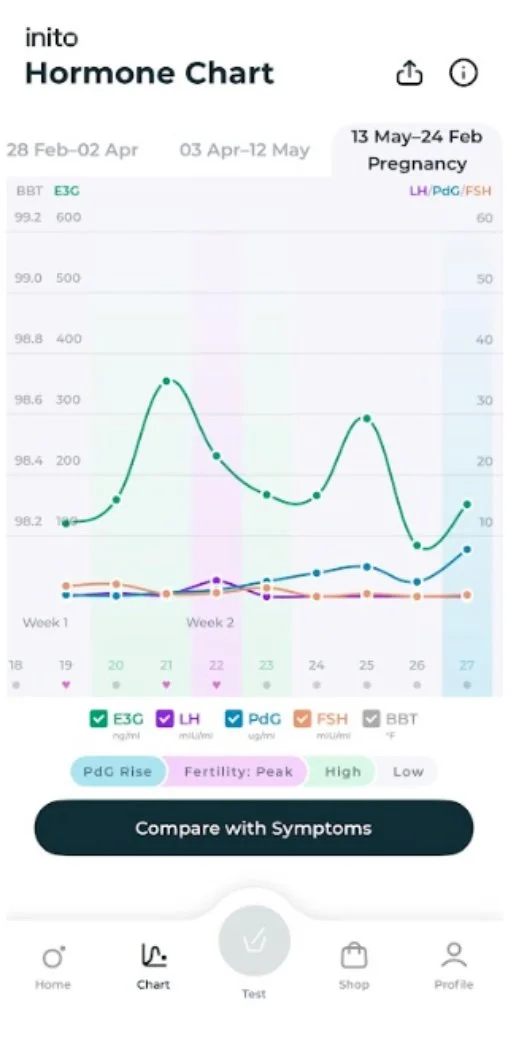
After coming off birth control and experiencing a miscarriage, she spent months trying to conceive with irregular, longer cycles and repeated negative pregnancy tests. She was doing everything “right” - tracking with ovulation kits, focusing on her health - but still felt like she was missing something.
When she started using Inito, she was able to see her hormone patterns more clearly for the first time. She discovered she was ovulating, but her LH levels were lower than what standard ovulation strips are designed to detect. Because of that, she was consistently getting negative results and unintentionally missing her fertile window.
With Inito’s multi-hormone tracking, she could identify her full fertile window and confirm ovulation based on her own hormone patterns—not population averages. A few cycles later, she conceived and is now expecting a healthy baby girl.
What stands out most in stories like this isn’t just the outcome, but how much multi-hormone tracking can bring clarity to the experience of trying to conceive.
What Is the Inito and How Does It Work?
Inito is an at-home fertility monitoring system that measures four key fertility hormones:
E3G
LH
FSH
PdG
It comes with a reader and fertility strips that you insert into your first morning urine daily. The hormone levels in your urine are analyzed, and the results are then displayed in the Inito app, where users can view detailed hormone charts and cycle insights.
Instead of relying on a single hormone signal, Inito tracks hormone trends throughout the cycle to help identify the full fertile window and confirm ovulation.
If you're curious about the science behind the system (fascinating!!), you can read more about how the Inito fertility monitor works here: What is Inito and how does it work?
InSight Wireless Reader™: What’s New and How It Works (and why I love it so much!)
Inito recently launched a new device called the InSight Wireless Reader™, which I started using earlier this year. The First Gen Reader that I also used and loved, required your phone to be physically connected during testing. While it worked incredibly well, the new InSight Wireless Reader™ improves the experience significantly. Literally all of my pain points have been solved!
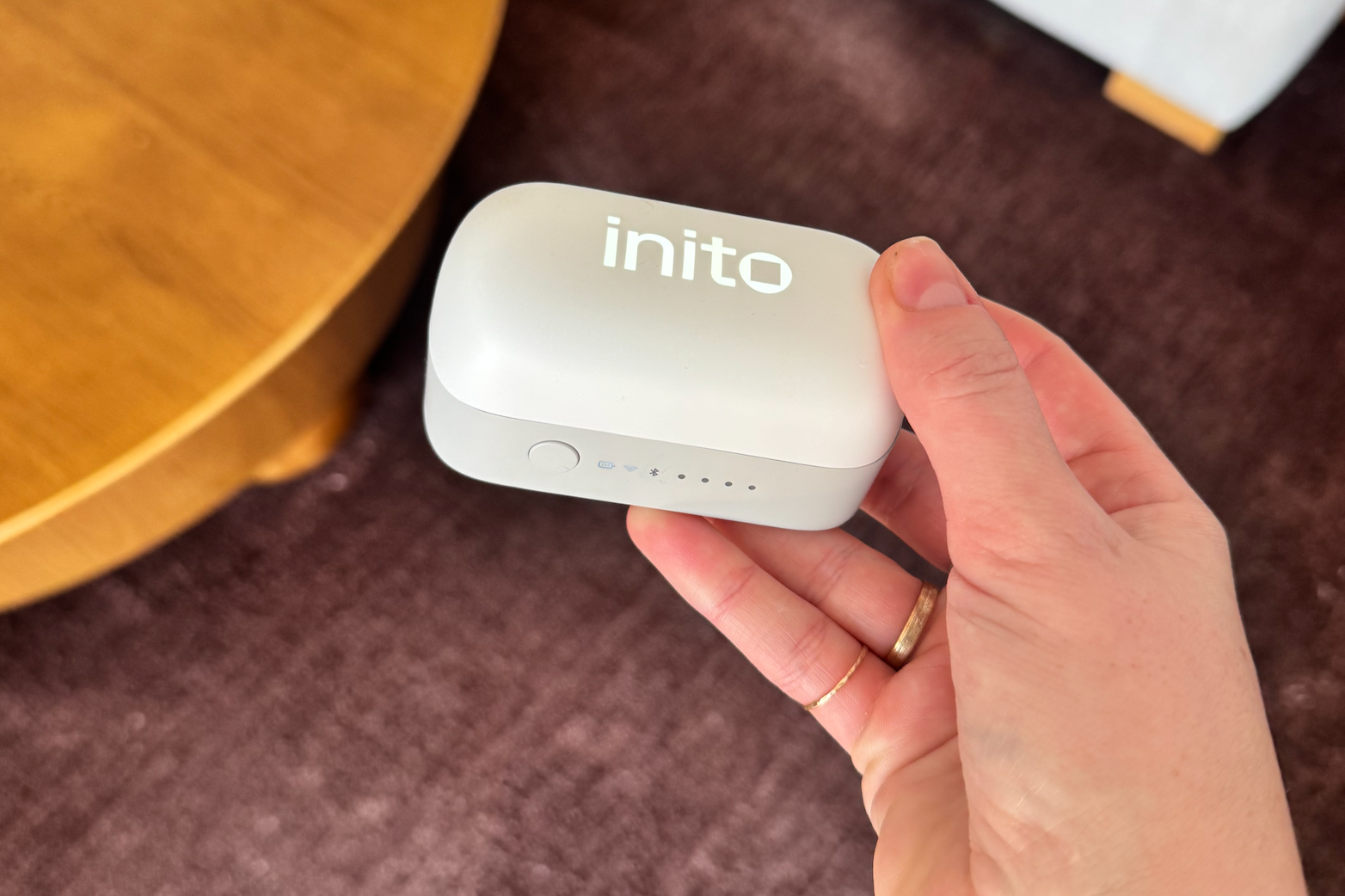
The first thing I noticed when opening the box was how compact the device is. It has a sleek, modern design and is small enough that I simply keep it on my bathroom counter. The biggest upgrade is that the new reader is completely wireless and so user-friendly.
The process is essentially:
Dip → Test → Go
Dip the fertility strip into the urine for 15 seconds
Insert the fertility strip into the reader
Walk away and continue your morning
The device automatically analyzes the strip and sends the results directly to the Inito app. Because the reader connects wirelessly through Wi-Fi, you don’t need to attach your phone during testing. This was actually one of my favorite upgrades.
As a busy mom with a four-year-old who wastes no time getting the day started, the ability to test and walk away has been incredibly convenient. Most mornings, I will test, insert the strip, and then go make coffee or start getting ready for the morning, before coming back to check my result and discard the strip.
How Precise is the InSight Wireless Reader™?
The InSight Wireless Reader™ uses a patented technology called Spectral Mapping to analyze hormones using the Fertility Strips. Without getting overly technical, the reader scans the entire strip in two ways and analyzes multiple signals to produce precise hormone readings. This helps provide clearer hormone data and reduces the uncertainty many people experience when interpreting faint ovulation strips. Instead of guessing whether a line is positive or not, the device provides precise and measurable hormone values.
Seeing Your Full Fertile Window with Inito
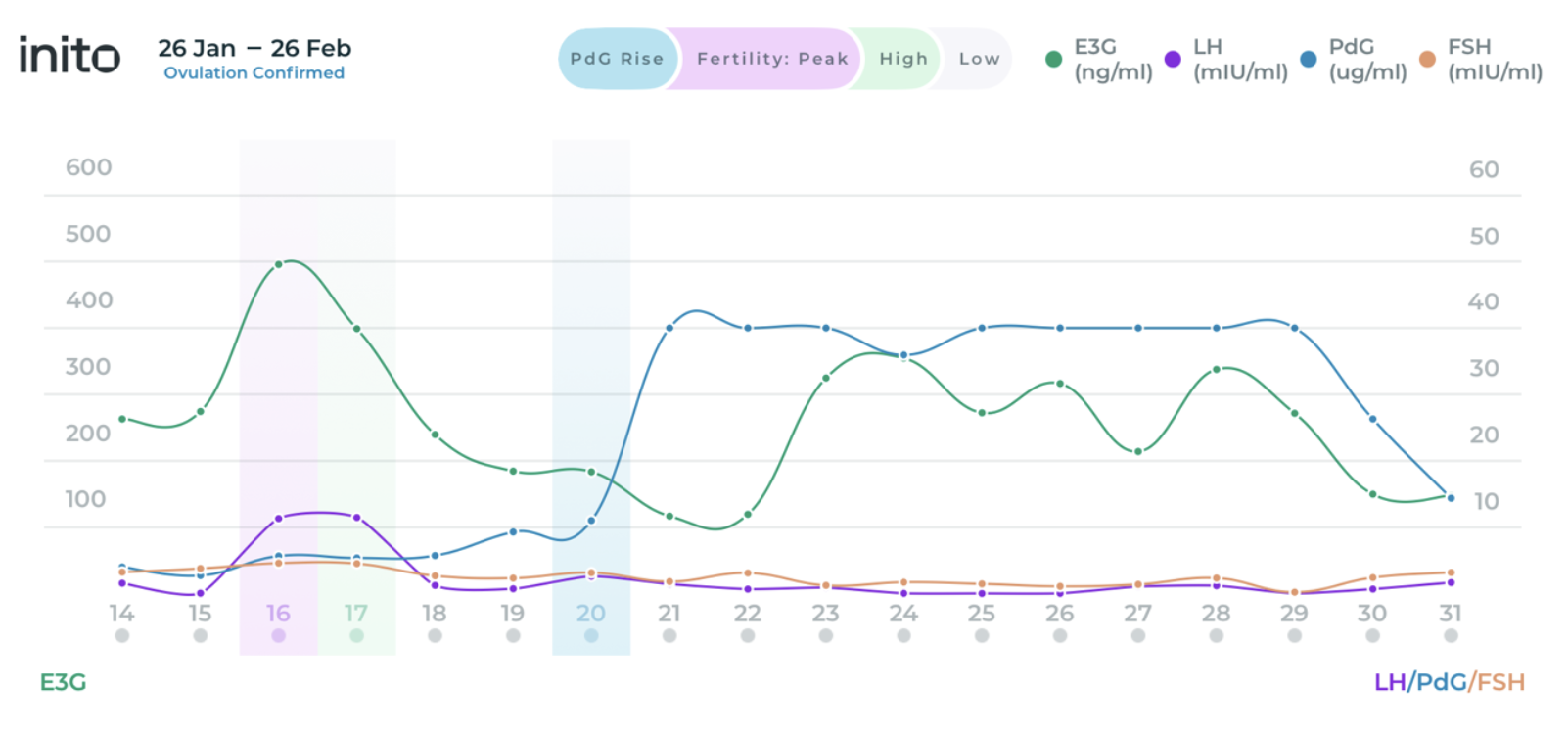
Another benefit of multi-hormone tracking is identifying the entire fertile window. Because the InSight Wireless Reader™ tracks estrogen levels rising before ovulation, it can detect the start of the fertile window earlier than LH strips alone.
Combined with LH and FSH tracking, the system can identify up to a six-day fertile window, giving couples more opportunities to time intercourse during the most fertile days, which are the 4 days prior to ovulation, the day of ovulation, and the day after. And tracking PdG helps confirm that you have ovulated.
If you’re wondering how accurate & reliable Inito is, studies have shown that Inito is 95% as accurate as compared to blood hormone trends, and can confirm ovulation with over 99% specificity. For me, this adds an extra layer of confidence in the data I’m seeing at home.
The Inito App Experience: Tracking Hormones and Understanding Your Cycle
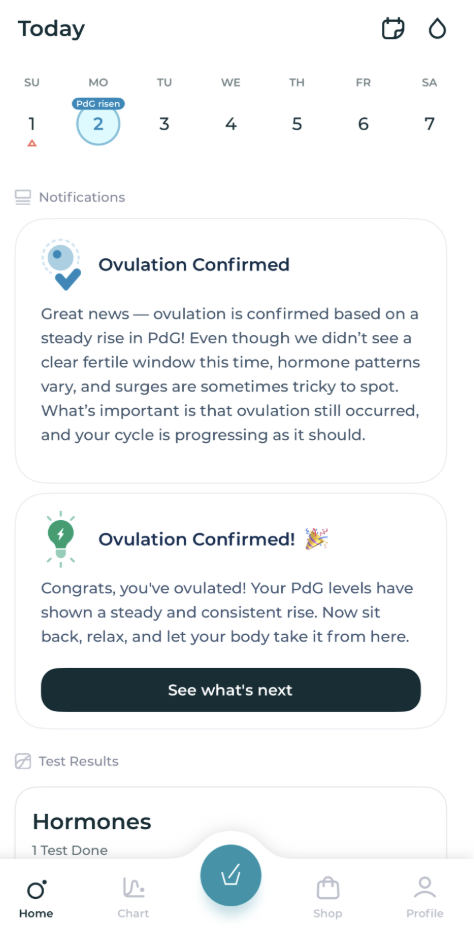
One of my favorite parts of using Inito is the app interface. Instead of simply labeling results as “high” or “low,” the app displays actual hormone values and charts. It provides you with insights like High Fertility, Peak Fertility, and Ovulation Confirmed based on your hormone readings for the day. Seeing those numbers and insights provides a much deeper understanding of what is happening in my cycle. This is something I’ve seen many women struggle with - getting clear, interpretable results - so having everything visualized this way makes a big difference.
For example, I get to know when I have ovulated and can track my luteal phase length. Having a short luteal phase can affect my chances of conception.
As someone who has experienced pregnancy loss in the past, seeing a sufficient luteal phase of 12-14 days was incredibly reassuring.
The app also provides:
Hormone trend charts
Ovulation confirmation
Personalized hormone insights
Charts that can be shared with healthcare providers (we use this all the time with our patients!)
Who Is Inito Best For?
After using the device myself and seeing how it fits into fertility care, I’ve recommended Inito to women across different stages of their fertility journey:
Women trying to conceive in their 30s
Women with irregular cycles
Women with PCOS
Women coming off birth control
Women who suspect hormone imbalances
Women working with functional fertility practitioners
At Motherland Wellness, we regularly work with women who feel confused about their cycles. Multi-hormone tracking with InSight Wireless Reader provides precise hormone values and clarity to what’s actually happening with the cycle.
The InSight Wireless Reader™ is priced at $169, but is currently available for only $99 using my link and code MOTHERLANDINITO. Compared to other multi-hormone fertility monitors I’ve explored, the pricing felt relatively accessible, especially considering that it tracks four key fertility hormones with lab-grade reliability.
Pros and Cons: My Honest InSight Wireless Reader™ Review
Pros
Tracks four key fertility hormones at home
Confirms ovulation with PdG
Identifies a full 6-day fertile window
Wireless testing
Detailed hormone charts in the app
Works on both Android and iPhone
More affordable than many advanced fertility monitors
Lab-grade values at home
Cons
Requires consistent testing at least for the first few cycles for the best hormone data
Fertility strips are an ongoing cost
Some users may need one cycle to learn the system
Frequently Asked Questions
Is the Inito fertility monitor an ovulation predictor or a hormone monitor?
Inito is a multi-hormone fertility monitor. It predicts your full 6-day fertile window using estrogen, LH, and FSH trends and confirms ovulation using PdG.
How often do you need to test?
You need to start testing on cycle day 6 of your cycle and continue testing till you confirm ovulation. The app tells you when to take a test based on your cycle patterns and past cycle date.
Does Inito work for irregular cycles?
Yes. Because the monitor tracks multiple hormones, it can provide insights even when cycles are irregular.
Is Inito better than LH strips
LH strips track a surge in one hormone, which can help predict ovulation. Inito tracks multiple hormones, including estrogen, LH, FSH, and PdG, which helps identify the full fertile window and confirm ovulation, providing a more complete picture.
Can Inito confirm ovulation?
Yes. Inito tracks PdG which is the urine metabolite of progesterone and rises only after ovulation. This helps verify that ovulation actually occurred. This is my favorite feature!
Can I share my Inito hormone charts with my doctor?
Yes. The app allows you to export hormone charts that can be shared with healthcare providers. I do recommend bringing your Inito hormone charts to appointments, especially between visits, as they can help your provider see ongoing hormone trends more clearly and support more informed discussions around your cycle.
Does the Inito starter kit work with Android?
Yes. The InSight Wireless Reader™ works with both Android and iPhone devices.
Final Verdict
Trying to conceive often involves a lot of guesswork, especially when you rely on period tracking apps or single-hormone ovulation tests. What I appreciate about the Inito Fertility Monitor is that it provides a complete view of what’s actually happening hormonally throughout the cycle. The new InSight Wireless Reader™ makes the process even easier by allowing you to test, get your morning routine out of the way, and receive results automatically in the app.
For women trying to conceive- especially in their 30s- having this level of hormone clarity can make the process feel far less frustrating. Instead of guessing whether ovulation happened, you can actually see the hormone patterns that confirm it. And that kind of insight is incredibly empowering, especially on a fertility journey.
Disclaimer:
This post is sponsored by Inito, a brand our practice genuinely recommends to our patients and that our team personally uses. These statements have not been evaluated by the Food and Drug Administration. This product is not intended to diagnose, treat, cure, or prevent any disease.